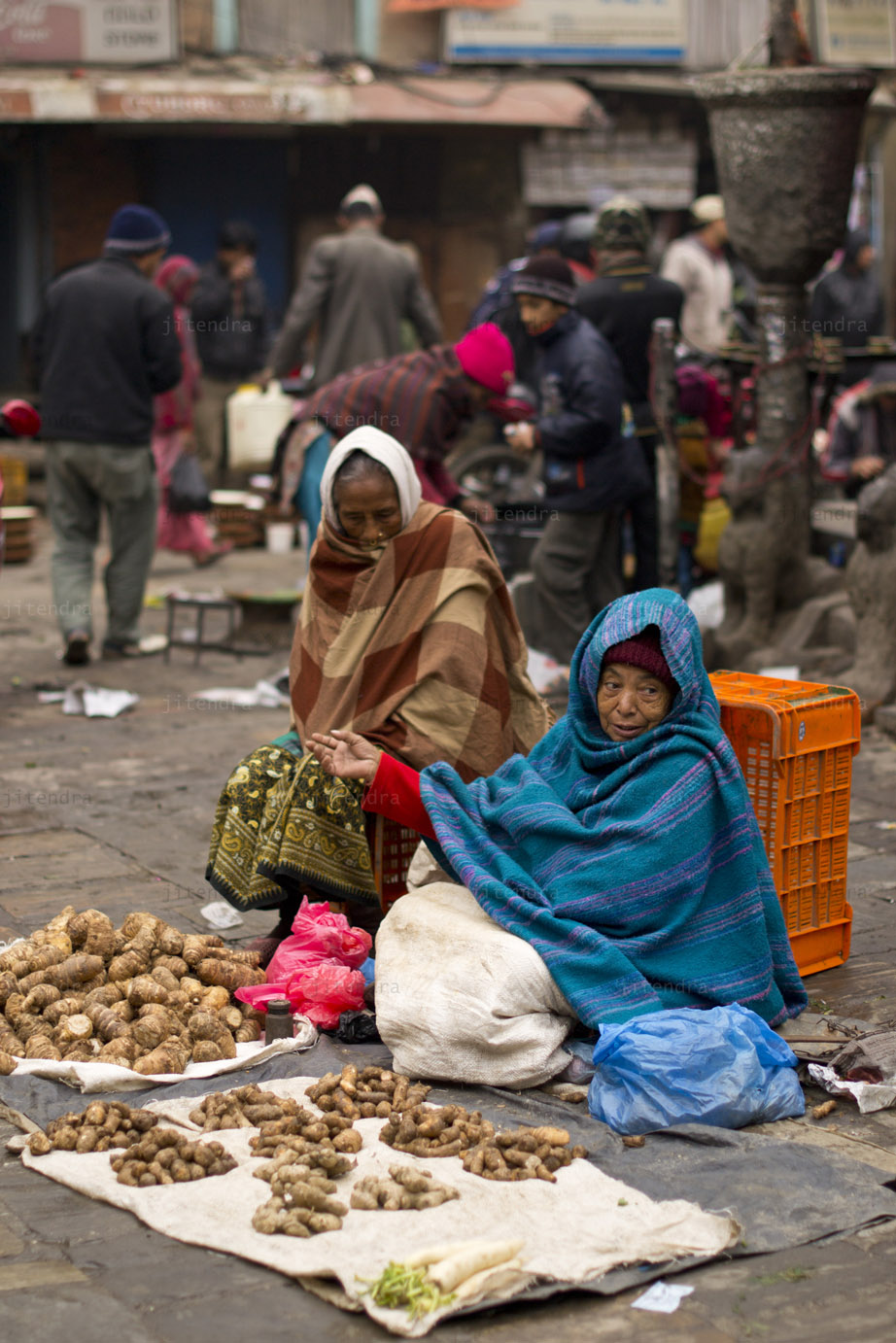
Sunday, January 15, 2012

Women and Paddy Field of Khokana

Hardworking women farmers from Khokana village, Lalitpur heading for their paddy field to work. The month of June in Nepal is season of planting paddy, followed by mid September to October as harvesting time. Agriculture is the major sector of Nepalese economy. It provides employment opportunities to 66 per cent of the total population and contributes about 36 per cent in the GDP.

Friday, January 13, 2012

Warm Winter Sun

A women taking naps in morning Sun at Bhhinchhe Bahal, Patan.

Thursday, January 12, 2012

Ghee Lamp for Annapurna

Light always signify knowledge and lighting ghee lamps can be more than just spreading knowledge if you have big faith in God. Many people light the lamp and bow down to knowledge as the greatest of all forms of wealth. Knowledge backs all our actions whether good or bad. People therefore keep a lamp lit during all auspicious occasions as a witness to thoughts and actions they take in life. I still remember my childhood days when my mother use to tell me that to offer a ghee lamp to God, is almost like burning yourself as a greatest offer to God.

Besides the traditional ghee and oil lamp has a further spiritual significance. The oil or ghee in the lamp symbolizes our vaasanas or negative tendencies and the wicked, the ego. When lit by spiritual knowledge, the vaasanas get slowly exhausted and the ego too finally perishes. The flame of a lamp always burns upwards. Similarly we should acquire such knowledge as to take us towards higher ideals.

Here's some devotees both from Buddhist and Hindu religion offering Ghee Lamps to Annapurna Ajima at Ason, Kathmandu in early morning.

Wednesday, January 11, 2012

Water Woes in Lalitpur.

People in core Patan city rely heavily on traditional water spouts like wells built more than a century ago as they serve as the best source of water during the dry season. Senior citizens of Lalitpur still recall, “No water from other source is tastier like well water”.
The well water is widely used in various household purposes, ranging from washing to cleaning and sometimes drinking as well. Tradition and cultural linked with wells still survive in this historic city and people here still celebrate Cithinakha festival, during which they clean wells and preserve them. Lalitpur is probably the only place left where the locals have managed to restore and conserve the historic wells.
But the problems do exist, as the constantly decreasing water level indicates serious water crisis in the near future. Well water level does not remain constant but changes over the certain time period. As people are drawing more water, water level too has decreased in the wells. As a result, adding of the extra rings in the already existing wells has become a regular community activity nowadays. But this does seems to be the solution. Occasional practice of rain water harvesting and other conservational acts are delaying the “Going deeper in search of water process” slightly. It is now high time people in Patan work towards fi nding better ways to save these traditional heritage.

Tuesday, January 10, 2012

Walking Shadows

Photos that I have captured one evening at Ason for photo assignment during Frederic Lexloux from Agence VU, France photography workshop 'Photographing The Everyday' organized by photocircle. It was fun and poetic moments chasing shadows for hours under street lamp at Ason that day. I know shadows fascinate many photographers while other may find them scary.

Monday, January 09, 2012

Clay Lamp from Bhaktapur

Traditional clay lamps known as 'dallucha' on display for sale at Pottery square Bhaktapur. Such lamps can be seen hanged outside windows of traditional Newar houses for burning oil lamp called ‘arati’ every evening.

Friday, January 06, 2012

Yomari: Delightful Newar Delicacy

Yomari is the traditional food of Newar community in Nepal. I am not a big fan of Yomari but there are many people whose mouths get watery while they think of it. Yomari is a Newari delicacy which is made of rice flour stuffed with sweet paste made of molasses and sesame. Every year during the full moon of December Newar community around the valley celebrated festival Yomaripune, and this delicacy is get cooked.

Wednesday, January 04, 2012

Bell for Prosperity

An elderly woman tries to ring the bell at Annapurna Ajima Temple at Ason on Wednesday morning Jan 4, 2012. Bells are very part of culture and religion in Nepal and ringing of the bell is regarded as an auspicious sound.

Tuesday, January 03, 2012

Assignment Ordinary

Prem Bahadur Kulung Rai, a jolly guy from Jirmale-5, Ilam. We have been working together at NEFEJ for past 12 years. I do not know what was his dreams when he ventured to this big city 19 years ago, but what he is now and his struggle in life is definitely not an ordinary challenge. Of course dreams he had then and reality now is completely a different picture. To survive in a big city at a rented room with 3 children and a wife is hard life for sure but will he has to carry on and face the challenge is really motivating. 'Assignment Ordinary' is my small attempt to document inspiring character in people like him.

Thursday, November 10, 2011

Season of Marigold: Tihar Festival

A little girl help her mother to make garland of Marigold near Kasthamandap, Kathmandu on Laxmi Puja. Marigold is an auspicious flower for Diwali festival.
Flower vendor making garland of marigold at Ason, Kathmandu. There is a huge demand of Marigold flower during Festival like Tihar.
A flower vendor selling bundle of garland at Ason, Kathmandu.
Vendors in their stall at Ason, making garland of Marigold flower which is in big demand for Laxmi puja during Tihar festival.
People retruning back home on bike after buying bundle of Marigold flower. People decorated their homes, shops and offices by marigold flower, which is considered an auspicious flower for Diwali festival.

Popular Posts