Quest for 'Street Photography'is a venture School of Creative Communications (SCC) explores along with 18 participants of Photography Workshop Batch XVIII that concludes today (November 1, 2011). Motive behind this venture is to help workshop participants to gain confidence and first-hand knowledge on pursuing street photography. These are some pictures I was able to capture during the workshop XVIII, while I help them take better street photos.
Sunday, October 02, 2011
Friday, July 01, 2011
Friday, April 22, 2011
Culture and People
Sunday, March 27, 2011
Into nothingness
This woman I met Last year (22nd March 2010) at Patan Darbar Square, who is resting in the course of a walk undertaken on an apparent errand and taking time off to draw on a cigarette too. Looked into it from the perspective of the slogan of building a “New Nepal” — a catch phrase now — there does not seem to be anything that interests her.
Friday, February 11, 2011
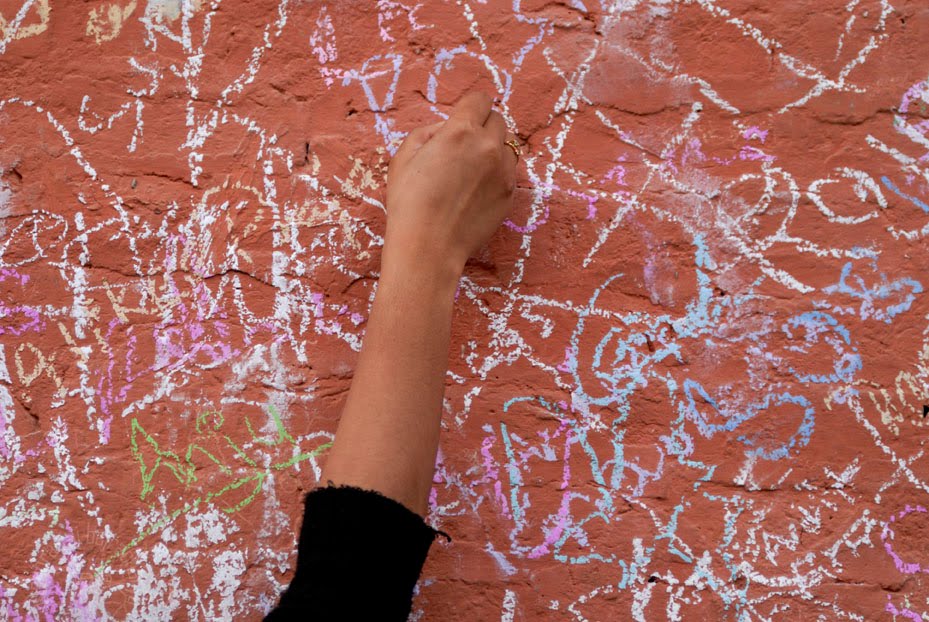
Graffiti For Saraswati
Devotees including Children amuses themselves in writing wall of Saraswait Temple in kathmandu while celebrating Shreepanchami festival February 8, 2011. Especially children are given their first writing and reading lessons at the Goddess Saraswati temple in the belief that the goddess of education Saraswati will help them excel in education
Friday, January 14, 2011
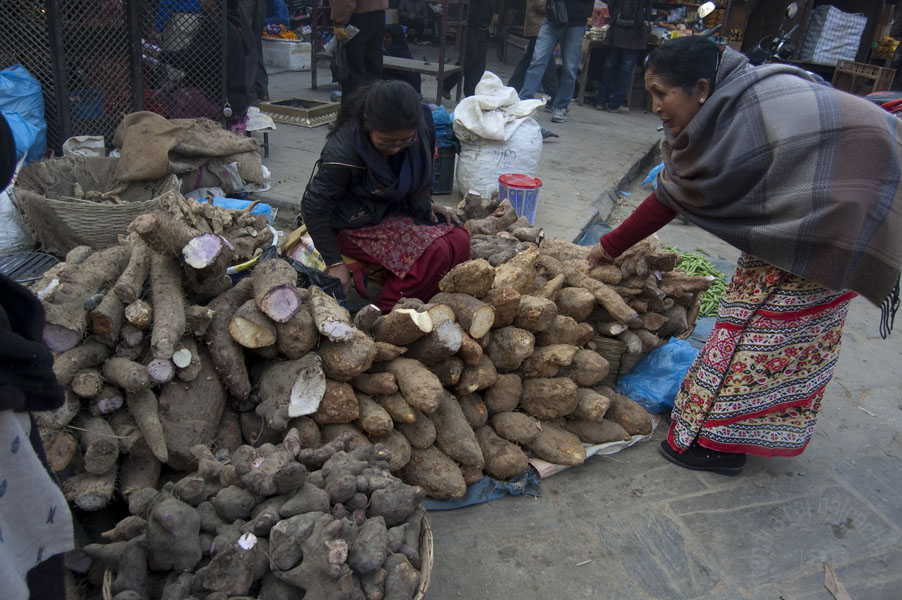
Hot Cake of Maghe Sangranti
Various kind of yam being sold at Ason Chok on Thursday morning, Kathmandu. Intake of Yam is must during Maghe Sankranti. Maghe Sankrati is observed at the beginning of the holy month of Magh. It is customary to take holy dips at river confluence, perform worship at various shrines and take yam and 'chaku' as special food items on this occasion.

The belief goes that eating such items as ghee and Chaku, sesame seed candy, vegetables and yam, and giving them away in charity on this day after taking a holy dip helps one become healthier.


Hindus in Nepal, India and Sikkim also observe this day as 'Makar Sankranti' as it marks the sun's journey Northwards.

The belief goes that eating such items as ghee and Chaku, sesame seed candy, vegetables and yam, and giving them away in charity on this day after taking a holy dip helps one become healthier.


Hindus in Nepal, India and Sikkim also observe this day as 'Makar Sankranti' as it marks the sun's journey Northwards.
Labels:
Ason,
City,
kathmandu,
Maghe Sangranti; Festival; Culture,
nepal,
People,
Sweet Potato,
Yam
Tuesday, January 11, 2011
Rudra: Tea Maker of Ason
The tower clock across the block has just hit 3:30 in the dead of night, and the denizens of city are cuddled up in their warm beds. But not Rudra. His day begins just before the crack of dawn. He is getting ready to start serving the piping hot cup of tea from 4 am.

Rudra, who is Mailadai to many, is following this schedule since the past 11 years. His tea stall, which is adjacent to Annapurna Ajima Temple at Ason Chowk, is a hallmark of quality cup of tea.
Needless to say his tea stall is literally swarmed by customers, with nearly all of them being well to do shop owners and traders of Ason. Maiya, his wife, can be seen delivering orders near and far.

The fare comprises black tea, lemon tea, masala tea and of course the usual milk tea. But one thing about the tea he serves is that it has the distinct taste. The fact that Rudra attracts customers from as far as Kavre and Banepa only substantiates the fact that he adds definite value to the commodity.

No wonder that the small stall is doing a roaring business at 1000 cups a day, with record being 1300 on his day. What is central to his tea stall is anyone who comes once makes it a point to return some day. Many are said to be starting their day saying, “ I will have tea at Rudra’s”.
His story goes back to many “ups” and “downs” of life before he decided to carve out his place on Ason street corner, literally. “Coincidentally, a certain Sita Didi had lent him Rs.1000 when he talked of setting up tea stall. Today he owns a good plot of land at Bhakatapur out of earning he made from his tea stall.
The beginning was unimpressive with only few customers coming his way. But he has taken big strides by the next 20 days. He says that the sale was “geometric”, whatever that means. He has not looked back ever since and lives with his wife, and a son.
His next job was at Putali Sadak and fetched him Rs.60 per month for the next four years. Rudra was wedded to Maiya while still minors, he, 12, and, she 9. Birat, their son, came 9 years hence. Now he is 17 and certainly at the climacteric phase of his life. One doubts the couple knows about it.


Someone who hails from Kavre, Rudra has only attended adult literacy classes. His wife too never went to school. But here is a punch to the tale: Rudra had come on to Kathmandu at the age of 6. He started as a dishwasher at his uncle’s tea stall at Bansbari. He has left the place after he was beaten up for “no reason” at all by his cousin.
This family of three is living happily today. Thanks to the consistent struggle of this couple, who can be a big answer to many who dream of migrating abroad for better life.

Rudra, who is Mailadai to many, is following this schedule since the past 11 years. His tea stall, which is adjacent to Annapurna Ajima Temple at Ason Chowk, is a hallmark of quality cup of tea.
Needless to say his tea stall is literally swarmed by customers, with nearly all of them being well to do shop owners and traders of Ason. Maiya, his wife, can be seen delivering orders near and far.
The fare comprises black tea, lemon tea, masala tea and of course the usual milk tea. But one thing about the tea he serves is that it has the distinct taste. The fact that Rudra attracts customers from as far as Kavre and Banepa only substantiates the fact that he adds definite value to the commodity.

No wonder that the small stall is doing a roaring business at 1000 cups a day, with record being 1300 on his day. What is central to his tea stall is anyone who comes once makes it a point to return some day. Many are said to be starting their day saying, “ I will have tea at Rudra’s”.
His story goes back to many “ups” and “downs” of life before he decided to carve out his place on Ason street corner, literally. “Coincidentally, a certain Sita Didi had lent him Rs.1000 when he talked of setting up tea stall. Today he owns a good plot of land at Bhakatapur out of earning he made from his tea stall.
The beginning was unimpressive with only few customers coming his way. But he has taken big strides by the next 20 days. He says that the sale was “geometric”, whatever that means. He has not looked back ever since and lives with his wife, and a son.
His next job was at Putali Sadak and fetched him Rs.60 per month for the next four years. Rudra was wedded to Maiya while still minors, he, 12, and, she 9. Birat, their son, came 9 years hence. Now he is 17 and certainly at the climacteric phase of his life. One doubts the couple knows about it. 

Someone who hails from Kavre, Rudra has only attended adult literacy classes. His wife too never went to school. But here is a punch to the tale: Rudra had come on to Kathmandu at the age of 6. He started as a dishwasher at his uncle’s tea stall at Bansbari. He has left the place after he was beaten up for “no reason” at all by his cousin.
This family of three is living happily today. Thanks to the consistent struggle of this couple, who can be a big answer to many who dream of migrating abroad for better life.
Tuesday, December 07, 2010
Friday, November 26, 2010
Workshop on Online Journalism at MTC/NEFEJ
Yet another workshop on 'Online Journalism' kicks in at Media Training Centre/NEFEJ today in Kathmandu. This workshop will continue till 28 November 2010 and there are 27 aspiring participants from different professions who wish to pursue further career as online reporter/journalist and blogger.
Online or new media practice is in initial stage in Nepal and objective of this workshop is to make participants familiar with online media and build their technical and professional capacity with specialized issue to address. Theme of the workshop is 'Food Hygiene Consumer Rights and Environmental Justice'.
During opening session, advocate and consumer right activist Jyoti Baniya shed light on importance of consumers rights and make participants aware of dreadful state of unhygienic food in the market. Another distinguished guest Dr. Narayan Balbase, former country director of IUCN also briefed on environmental justice and need of environment conservation in the country.
Later today, Suraj Adhikari and Chandra K. Chakradhar IT expers from Nepalnews.com shared participants the development of online journalism in Nepal and various facets of running webpage and online business.


Online or new media practice is in initial stage in Nepal and objective of this workshop is to make participants familiar with online media and build their technical and professional capacity with specialized issue to address. Theme of the workshop is 'Food Hygiene Consumer Rights and Environmental Justice'.
During opening session, advocate and consumer right activist Jyoti Baniya shed light on importance of consumers rights and make participants aware of dreadful state of unhygienic food in the market. Another distinguished guest Dr. Narayan Balbase, former country director of IUCN also briefed on environmental justice and need of environment conservation in the country.
Later today, Suraj Adhikari and Chandra K. Chakradhar IT expers from Nepalnews.com shared participants the development of online journalism in Nepal and various facets of running webpage and online business.


Labels:
journalism,
journalist,
kathmandu,
media,
mtc,
nefej,
online,
training,
workshop
Monday, November 15, 2010
Nepal Sambat 1131
Nepal Sambat, a unique calendar which is named after the country, is based on lunar calendar and is believed to have started during 880 AD when Shankhadhar Shakhwa, a local merchant from Kathmandu, paid off the debts of common people on his own, thus emancipating thousands of people from serfdom.

According to the state-owned news agency RSS, the Nepal Sambat calendar was in use for 888 years and it was banned at the state level in 1960 Bikram Sambat year.

Different efforts were made to reinstate the Nepal Sambat since the establishment of democracy in 2007 BS.

The government declared Shankhadhar Sakhwa who propounded the Nepal Sambat calendar and made notable contribution to society and the nation as national luminary in 2055 BS.


According to the state-owned news agency RSS, the Nepal Sambat calendar was in use for 888 years and it was banned at the state level in 1960 Bikram Sambat year.

Different efforts were made to reinstate the Nepal Sambat since the establishment of democracy in 2007 BS.

The government declared Shankhadhar Sakhwa who propounded the Nepal Sambat calendar and made notable contribution to society and the nation as national luminary in 2055 BS.


Subscribe to:
Posts (Atom)
Popular Posts
-
My degree of optimism is exceptionally high so I prefer to see brighter side of the Sun despite eclipse. This positive attitude helps me a l...
-
Cascade of claps and cheers from the crowd crowned me not less than Lance Armstrong in winning Tour de France when I wheeled the finish li...
-
I am not sure why these house sparrows are brawling. May be it is survival tactic as saying goes, 'Survival of the fittest'. Interes...
-
It was a cold rainy morning and I got little wet while coming to my office. So I tried to make myself warm sipping black tea and reading new...
-
Hey Jiten Mama what are you doing? That's the camera . Oooooo I know what you up to. Do I look Cute? Cheeeeeeeeese.. Jiten Mama! Can I ...
-
Fancifully, I woke up in a strange bedroom and it didn't take long for me to realize that I was in a luxurious accommodation of Himalaya...